2026 cohorts are now open across all programs · See the programs
Professional certificationCPAI-01
Certified Professional in AI
Six months · Live masterclasses · Guaranteed internship
The Institute's flagship certification pairs a 12-week live masterclass sequence with a three-month mentored internship — training practitioners to build, deploy, and reason about AI systems, not merely study them.
6 mo
Program length
12 wk
Live masterclasses
3 mo
Guaranteed internship


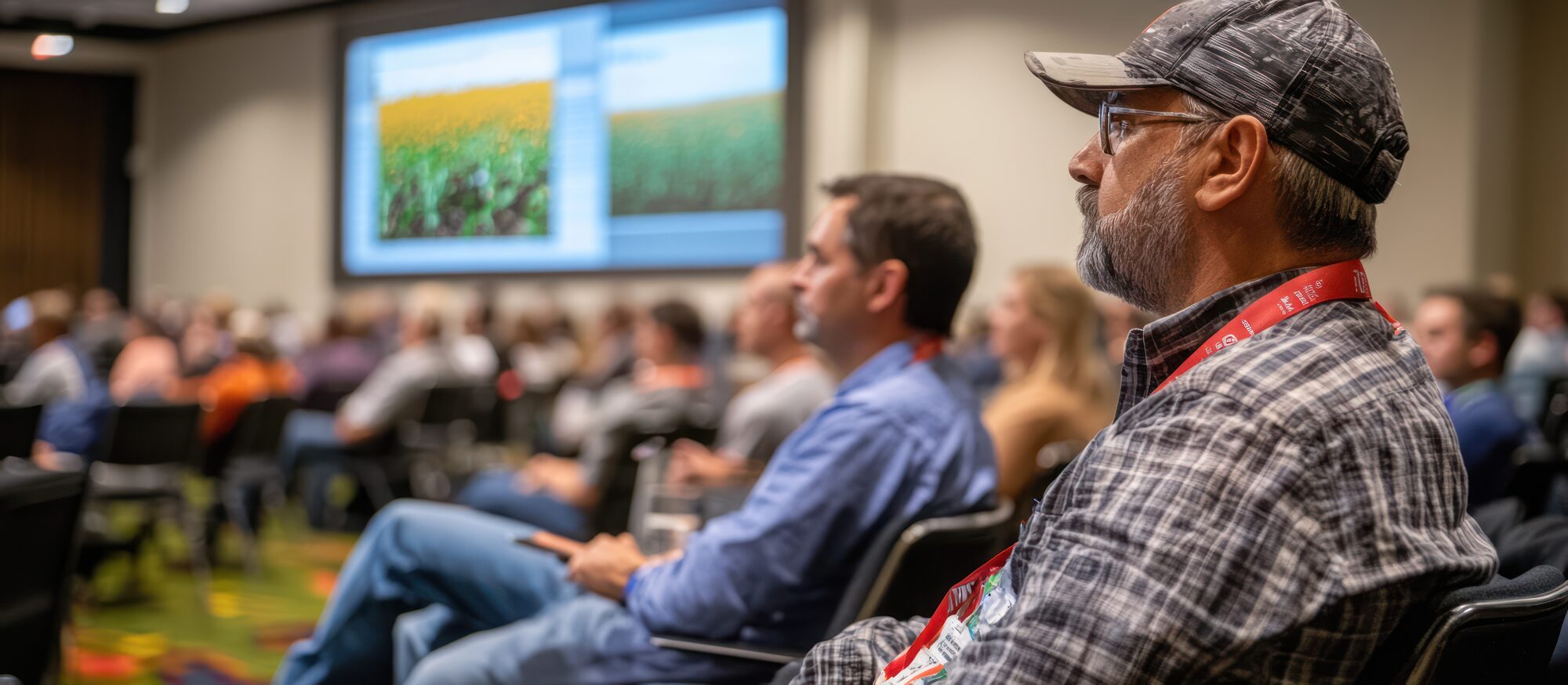
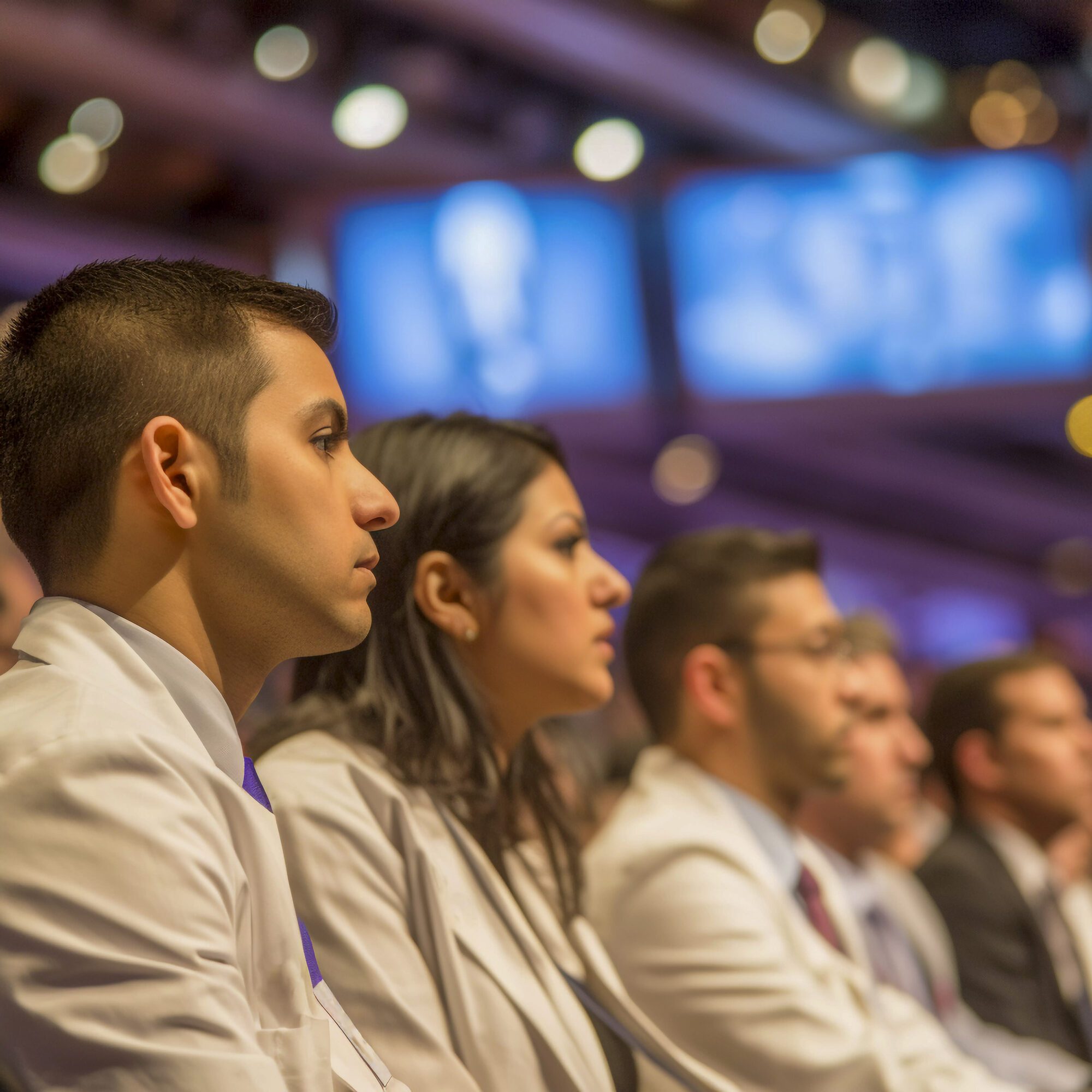
Cohort session — applied ML lab
Programme overview
Built to practice, not to watch
Six components structure the programme — from live instruction through an assessed internship with Heisenberg Research Labs.
Long-duration program
A focused, six-month journey dedicated to mastering AI and machine learning.
Live masterclasses
A 12-week immersive live masterclass sequence covering core concepts and advanced applications.
Guaranteed internship
A three-month internship with Heisenberg Research Labs delivering practical, on-the-job experience.
Applied expertise
Real-world practice blended with theoretical foundations — built for employability.
The credential
The Certified Professional in AI (CPAI) credential, issued on full completion.
Quantum computing module
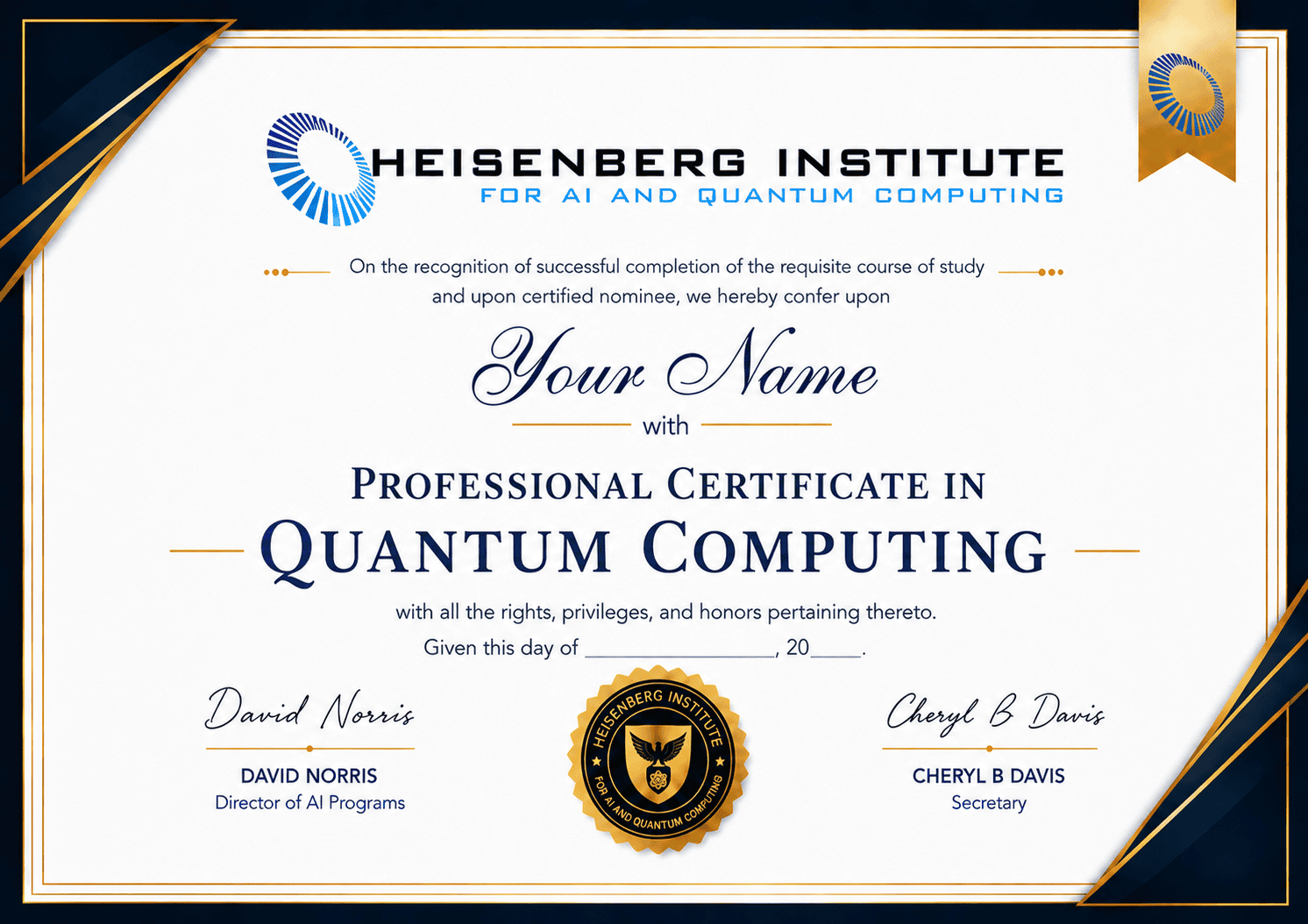
A bonus masterclass and Professional Certificate in Quantum Computing.

Faculty-led cohort instruction
Who this program is for
Two entry profiles
Students
- Final-year students
- Computer science graduates
- Fresh graduates seeking specialization
- Students looking for career direction
Working professionals
- Software developers and engineers
- Data analysts transitioning to AI
- IT professionals seeking upskilling
- Career changers entering the AI field
Recognition
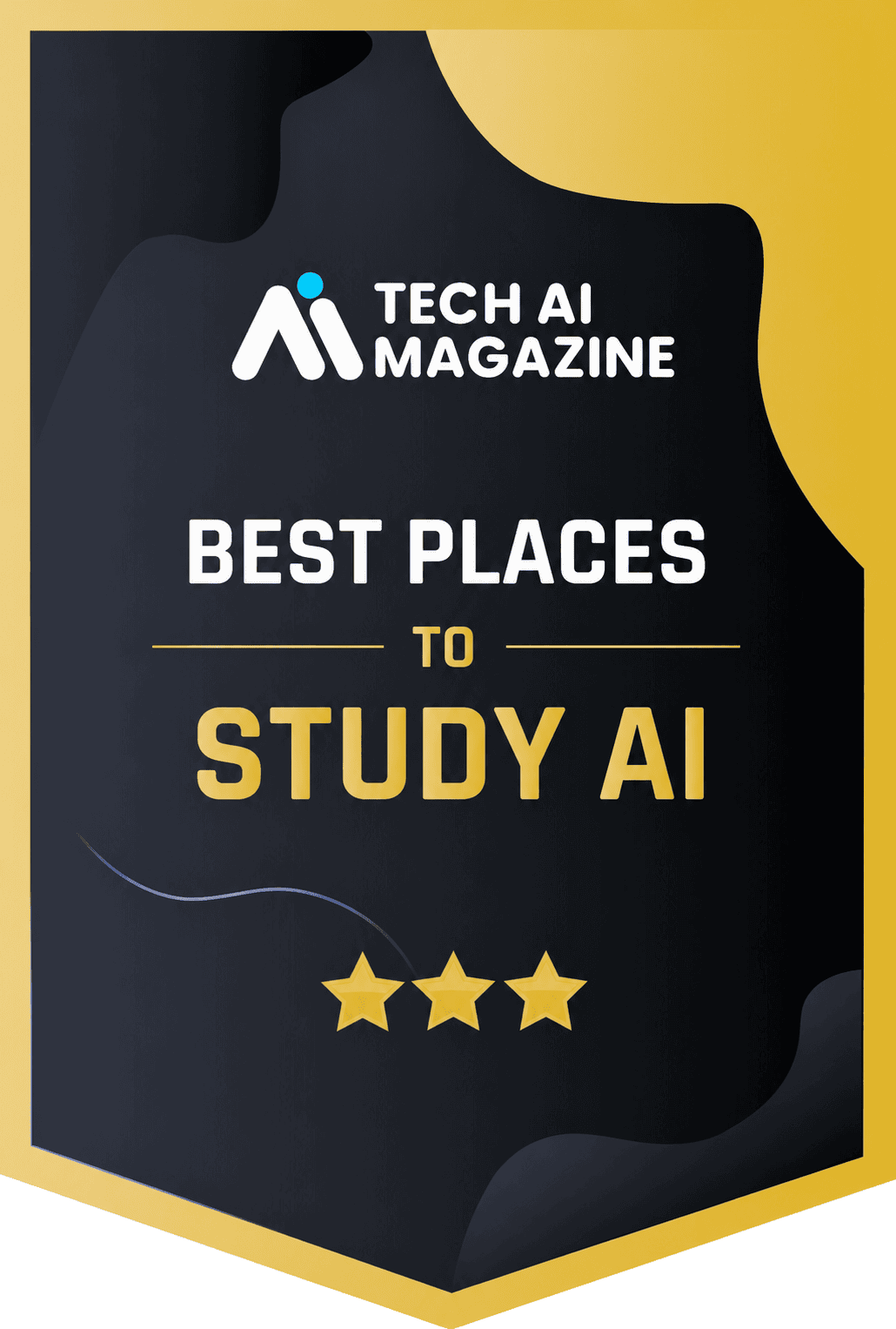
Best Places to Study AI
Tech AI Magazine has recognized the Heisenberg Institute for AI and Quantum Computing in its Best Places to Study AI listing.
What you get
Why Heisenberg
What the Institute puts behind every candidate it admits.
Guaranteed 3-month AI internship
Intern with Heisenberg Research Labs, with the flexibility to choose a research or an applied-engineering track.
Global faculty and experts
Learn from leading AI researchers and industry experts across multiple domains.
AI residency opportunities
Advance your journey through exclusive AI research and innovation opportunities.
Quantum computing masterclass
A live masterclass and a Professional Certificate in Quantum Computing, included with the programme.
Hands-on research projects
Build a portfolio of practical AI projects developed through Heisenberg Research Labs.
Flexible payment options
Instalments and flexible payment plans — talk to the admissions team.
Job assistance
The Institute's career team stays with you from portfolio to placement.
- Resume building
- Mock interviews
- Interview preparation
- Career guidance
- Job connections and updates
Faculty
Who teaches the CPAI programme
Practising AI researchers and engineers from Heisenberg Research Labs, teaching from the production systems they build. Select a name to read their profile.
Beyond the programme team, a global faculty of practitioners, researchers and technology enablers teaches across the Institute, and every cohort also meets visiting CEOs, CAIOs and AI researchers. All of them are named in the Faculty Directory 2026.
By the numbers
The Institute in numbers
|ψ⟩ = α|0⟩ + β|1⟩
5
Programmes
Five certifications, from a two-month foundation to two six-month flagships.
22
Faculty
Eight lead and fourteen visiting practitioners who shape the curriculum and mentor cohorts.
3 mo
Internship
Structured project work with Heisenberg Research Labs on actual business problems.
3×
Skill acquisition
Faster mastery through guided practice and immediate application.
24/7
Learning access
Always-available platform and a community of peers, mentors, and alumni.
Applied training
Learn AI with real industry practice
Classroom knowledge is applied immediately. Every participant completes a mentored internship inside Heisenberg Research Labs, working on production problems in customer experience, retail, healthcare, or software engineering.
Guaranteed internship — a three-month applied project mentored by Heisenberg Research Labs.
Career acceleration — portfolio development, résumé preparation, and the Institute's certification.
Mentorship — guidance from the 22 faculty who shape the curriculum and review internship work.
The journey
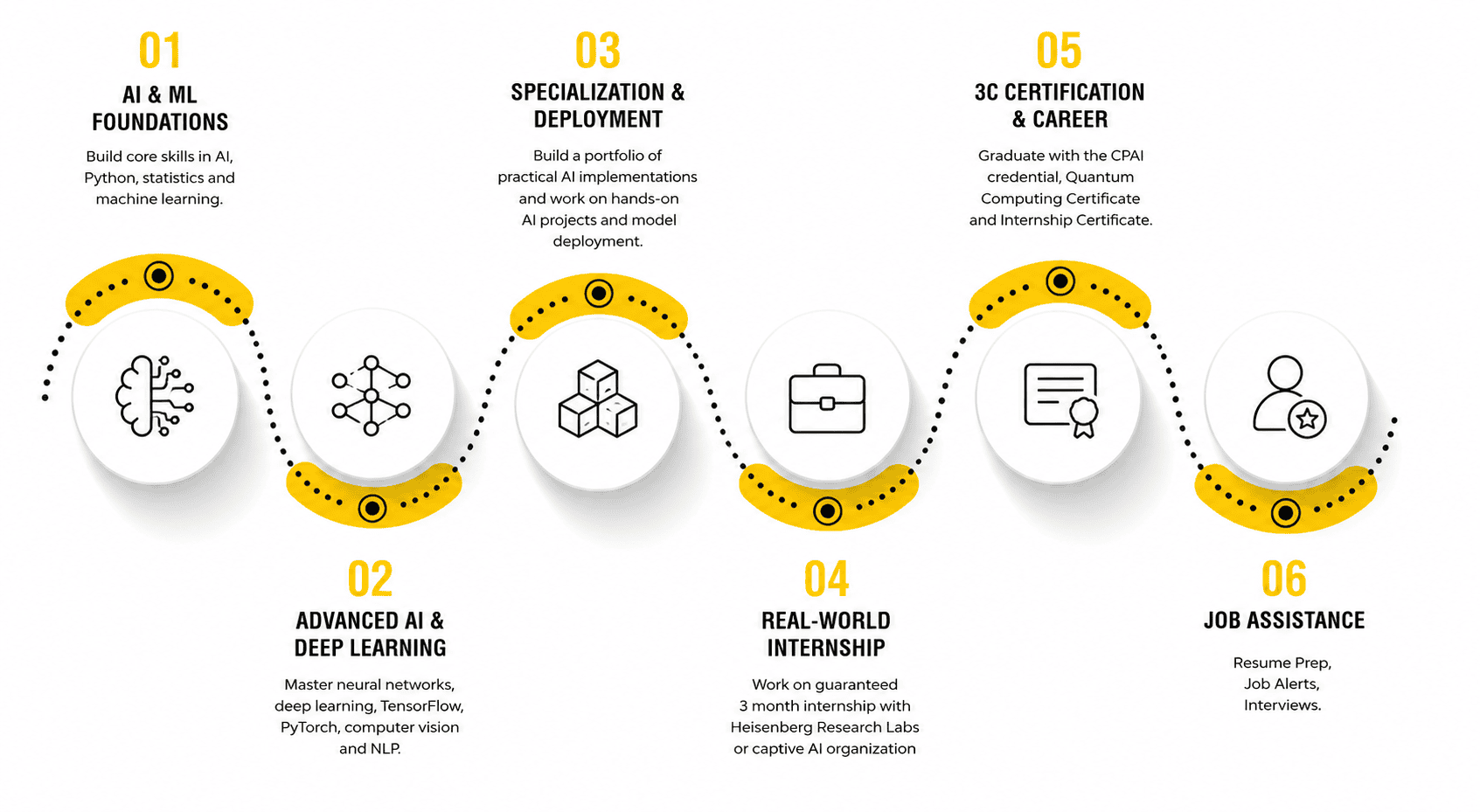
Six stages, foundations to placement
The order is the programme: skills first, then the projects that prove them, then the internship and the credential that follow.
01
AI and ML foundations
Build core skills in AI, Python, statistics and machine learning.
02
Advanced AI and deep learning
Master neural networks, deep learning, TensorFlow, PyTorch, computer vision and NLP.
03
Specialization and deployment
Build a portfolio of practical AI implementations and work on hands-on AI projects and model deployment.
04
Real-world internship
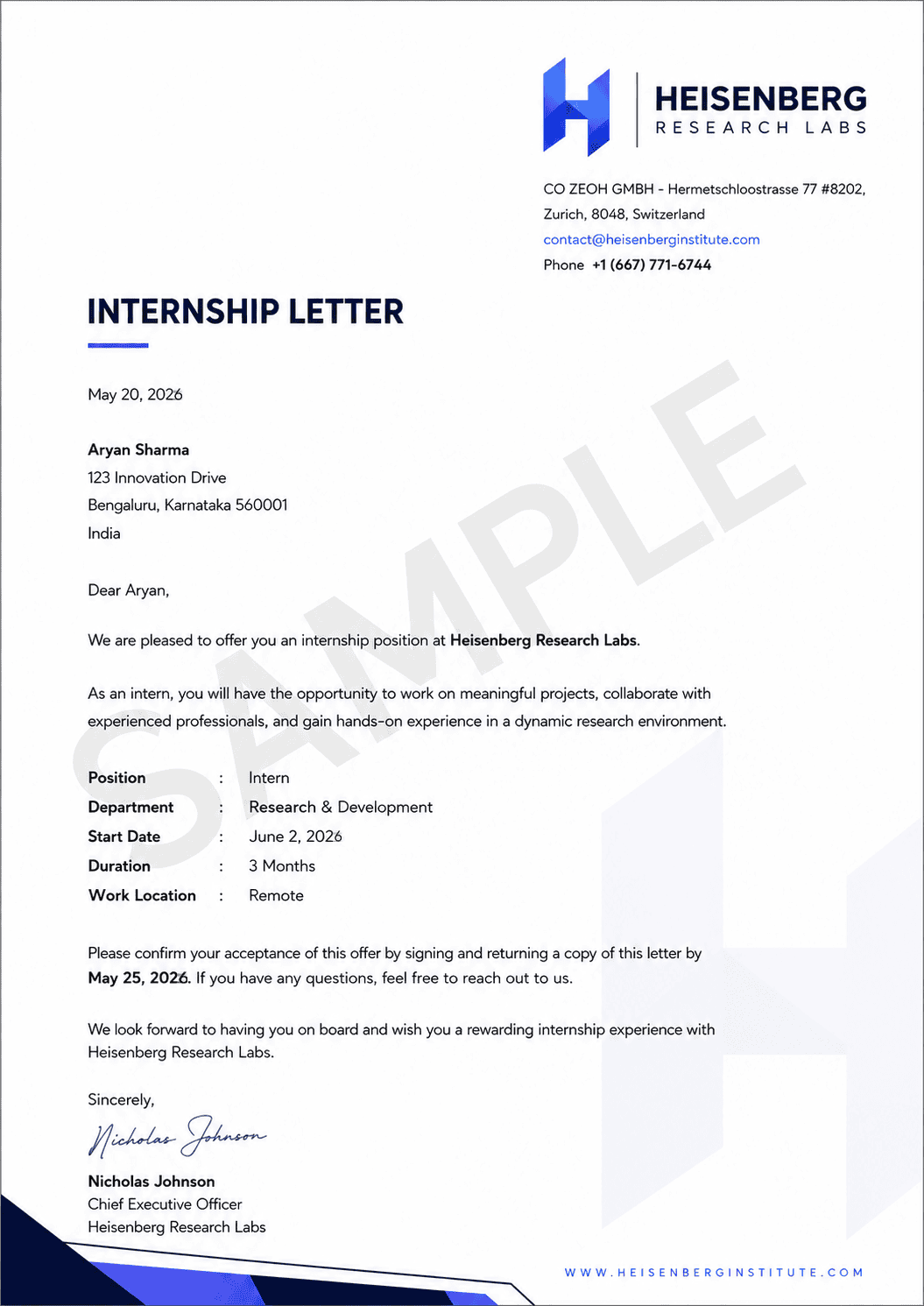
Work on a guaranteed three-month internship with Heisenberg Research Labs.
05
3C certification and career
Graduate with the CPAI credential, a Quantum Computing Certificate and an Internship Certificate.
06
Job assistance
Resume preparation, job alerts and interviews.
Tools ecosystem
The tools you will actually use
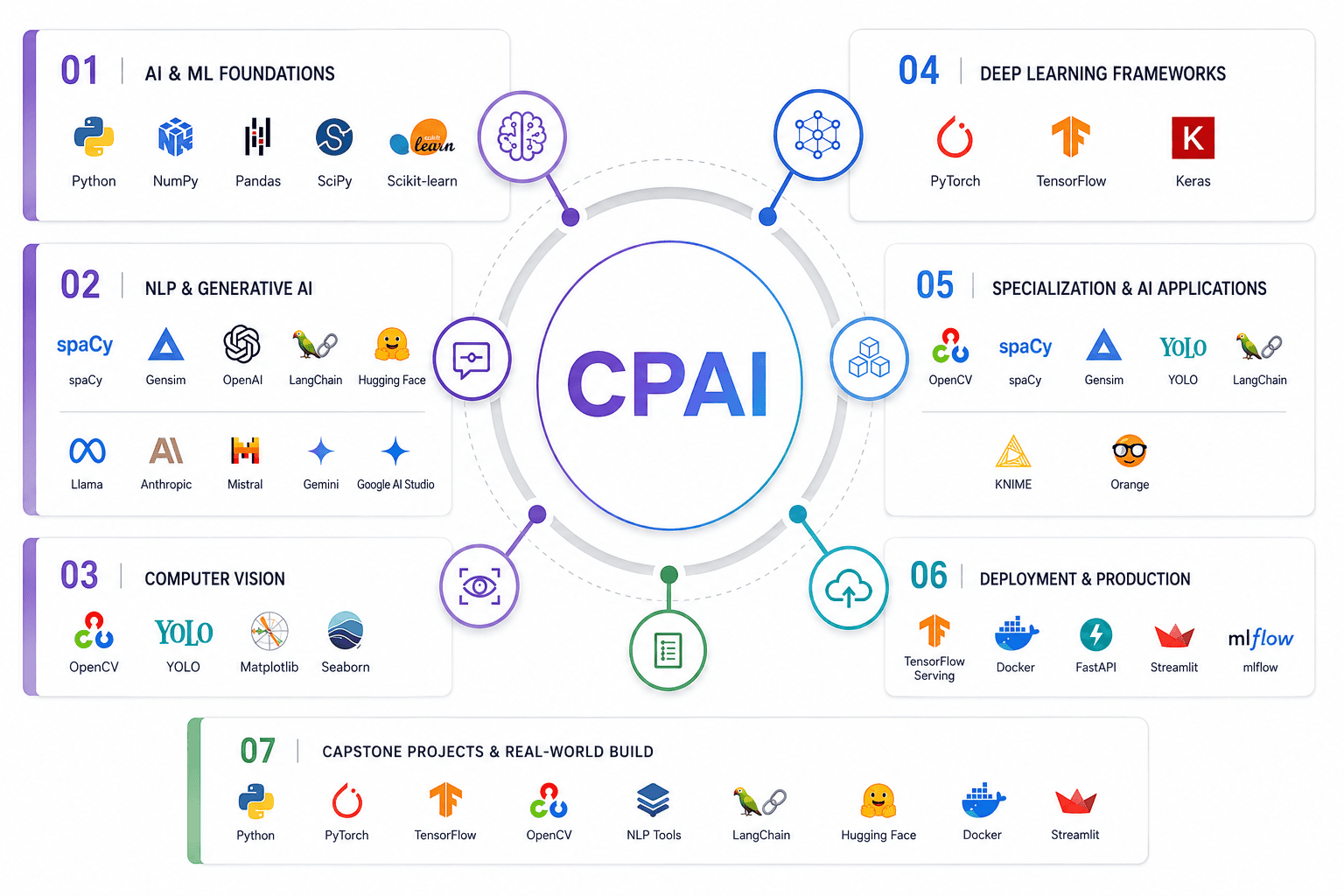
Seven groups of tooling, taught in the order the programme needs them — from the Python data stack through to what it takes to put a model in production.
AI and ML foundations
Python · NumPy · Pandas · SciPy · Scikit-learn
NLP and generative AI
spaCy · Gensim · OpenAI · LangChain · Hugging Face · Llama · Anthropic · Mistral · Gemini · Google AI Studio
Computer vision
OpenCV · YOLO · Matplotlib · Seaborn
Deep learning frameworks
PyTorch · TensorFlow · Keras
Specialization and AI applications
OpenCV · spaCy · Gensim · YOLO · LangChain · KNIME · Orange
Deployment and production
TensorFlow Serving · Docker · FastAPI · Streamlit · MLflow
Internship and real-world build
Python · PyTorch · TensorFlow · OpenCV · NLP tooling · LangChain · Hugging Face · Docker · Streamlit
3C certification
Three credentials, one programme
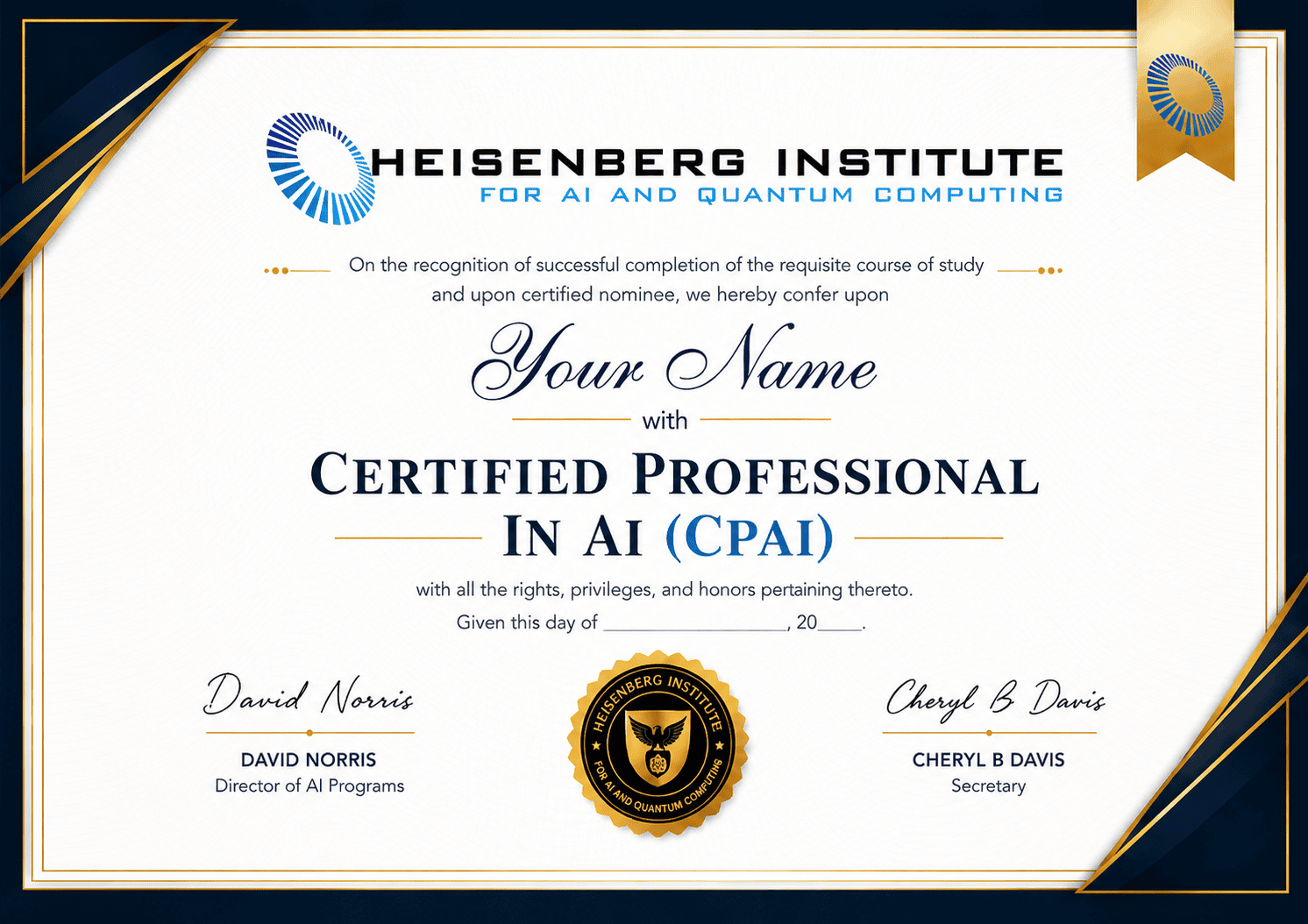
Successful completion of the CPAI programme confers three distinct credentials issued by the Institute.
Certified Professional in AI (CPAI)
Validates your expertise and credibility as an AI practitioner.
Professional Certificate in Quantum Computing
Demonstrates your fundamentals in quantum technologies.
Internship Certificate
Issued on completion of the guaranteed three-month internship — confirmed real-world experience.
Alumni voices
In their own words
Learners on the CPAI programme on what changed for them.
Intake schedule
Monthly cohort commencement
The programme admits a cohort every month. Applying early is the surest way to secure the cohort you want.
All classes are held online only. Live sessions run on Saturday and Sunday, 1:30–4:30 PM GMT.
Cohort
Application closes
Program starts
Status
CohortSeptember 2026 Cohort
Application closesSeptember 1, 2026
Program startsSeptember 25, 2026
StatusClosed
CohortOctober 2026 Cohort
Application closesOctober 1, 2026
Program startsOctober 25, 2026
StatusOpen
CohortNovember 2026 Cohort
Application closesNovember 1, 2026
Program startsNovember 25, 2026
StatusUpcoming
CohortDecember 2026 Cohort
Application closesDecember 1, 2026
Program startsDecember 25, 2026
StatusUpcoming
CohortJanuary 2027 Cohort
Application closesJanuary 1, 2027
Program startsJanuary 25, 2027
StatusUpcoming
Programme fee
$2,199USD · full programme
Flexible payment options and corporate sponsorship support are available — contact the admissions team for details.
Bonus: participants in the CPAI programme receive a live masterclass on quantum computing and a Professional Certificate in Quantum Computing.
Your fee includes
- The 3C certification awarded by the Heisenberg Institute for AI and Quantum Computing
- Live faculty-led masterclasses — interactive sessions with practicing AI experts
- Career acceleration: mentorship, professional networking, and lifetime alumni membership
Frequently asked questions
Before you apply
Are classes held online or on campus?
All classes are held online only. Live sessions run on Saturday and Sunday, from 1:30 PM to 4:30 PM GMT, so the programme can be completed alongside full-time study or work.
When do cohorts begin?
Cohorts commence every month. Applications for each cohort close on the 1st of the month, and classes begin on the 25th. Early application is encouraged.
What is the weekly workload?
A project is assigned every week, and students are expected to complete each assigned project. Together with the weekend live sessions, participants should plan for a meaningful weekly time commitment — this is a rigorous programme that rewards consistent attention.
What happens if I am unable to keep up with projects or attendance?
The programme asks for sustained commitment, and the Institute supports every student in meeting it. That said, where a student is repeatedly unable to complete assigned projects or attend sessions, the Institute may respectfully withdraw them from the programme. In such cases fees are refunded on a pro-rata basis; certification, however, cannot be issued without full completion. See the refund policy.
What benefits do I receive after completing the programme?
Graduates earn the 3C certification — the CPAI credential, a Professional Certificate in Quantum Computing, and an Internship Certificate — alongside a reviewed project portfolio, résumé and career preparation, mentorship from industry experts, professional networking across the Institute's network, and lifetime alumni membership.
Is there an internship as part of this programme?
Yes. Every participant completes a guaranteed three-month internship with Heisenberg Research Labs, with the flexibility to choose a research or an applied-engineering track. It is a graded part of the programme and it earns an Internship Certificate alongside the CPAI credential. Tech AI Magazine lists the Institute among its Top 10 Global AI Institutes of 2026.
Are flexible payment options available?
Yes. Flexible payment plans and corporate sponsorship support are available — contact the admissions team for details.
Is there an AI residency programme?
Yes. Top-performing students may be selected for the Heisenberg AI Residency programme, where residents contribute to real-world projects, research, and publications alongside Heisenberg Research Labs.
Who mentors the internship project?
All internship projects are mentored within Heisenberg Research Labs, where students apply their learning to production problems under the guidance of experienced AI engineers.