2026 cohorts are now open across all programs · See the programs
Professional certificationCPAA-01
Certified Professional in Agentic AI
Six months · Multi-agent systems · Guaranteed internship
A six-month programme that turns engineers into builders of autonomous systems — agents that reason, decide, coordinate, and act on real business problems rather than answer questions about them.
6 mo
Program length
5+
Agent frameworks
3 mo
Guaranteed internship


Internship team — multi-agent architecture review
Programme overview
Built to ship agents, not to demo them
Six components structure the programme, from agent-oriented programming fundamentals through a mentored internship with Heisenberg Research Labs.
Production-ready multi-agent systems
Build autonomous systems from foundational concepts through to deployment.
Industry-standard frameworks
LangGraph, CrewAI, AutoGen and the OpenAI Agents SDK, used as practitioners use them.
Advanced reasoning frameworks
Chain-of-Thought, ReAct, Tree-of-Thoughts, and reflection patterns implemented in full.
Guaranteed internship
A three-month applied project with Heisenberg Research Labs.
Agent safety and monitoring
Sandboxing, observability and guardrails for systems that act without supervision.
Quantum computing module
A bonus live masterclass and a Professional Certificate in Quantum Computing.

Faculty-led cohort instruction
Who this program is for
Two entry profiles
Students
- Final-year students
- Computer science graduates
- Fresh graduates seeking specialization
- Students already writing Python
Working professionals
- Software developers and engineers
- Data analysts transitioning to AI
- IT professionals seeking upskilling
- Career changers with working Python
Recognition
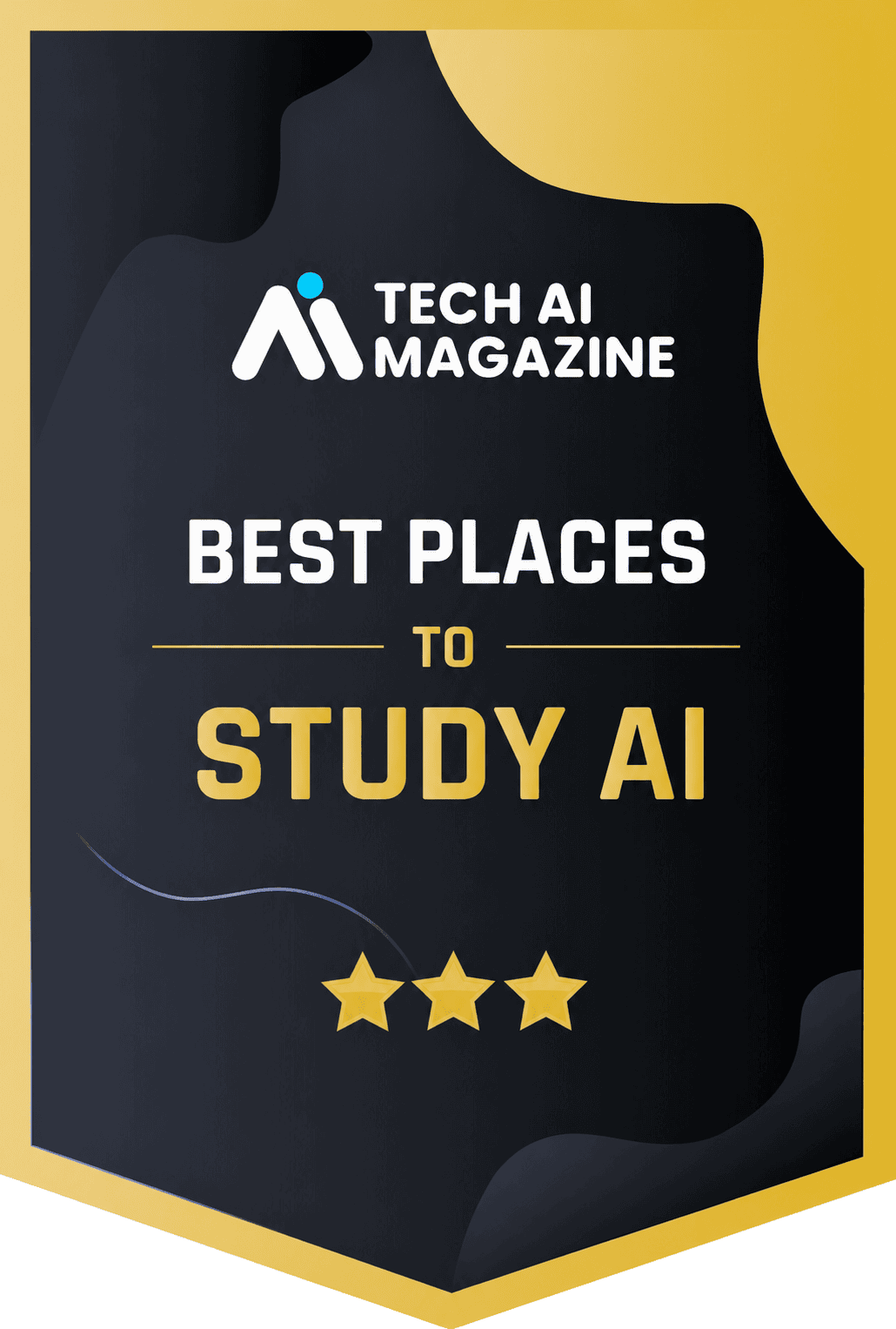
Best Places to Study AI
Tech AI Magazine has recognized the Heisenberg Institute for AI and Quantum Computing in its Best Places to Study AI listing.
What you get
Why Heisenberg
What the Institute puts behind every candidate it admits.
Guaranteed 3-month AI internship
Intern with Heisenberg Research Labs, with the flexibility to choose a research or an applied-engineering track.
Global faculty and experts
Learn from leading AI researchers and industry experts across multiple domains.
AI residency opportunities
Advance your journey through exclusive AI research and innovation opportunities.
Quantum computing masterclass
A live masterclass and a Professional Certificate in Quantum Computing, included with the programme.
Hands-on research projects
Build a portfolio of practical AI projects developed through Heisenberg Research Labs.
Flexible payment options
Instalments and flexible payment plans — talk to the admissions team.
Job assistance
The Institute's career team stays with you from portfolio to placement.
- Resume building
- Mock interviews
- Interview preparation
- Career guidance
- Job connections and updates
Faculty
Who teaches the CPAA programme
The people who build and run agents in production at Heisenberg Research Labs — reasoning, orchestration and reliability. Select a name to read their profile.
Beyond the programme team, a global faculty of practitioners, researchers and technology enablers teaches across the Institute, and every cohort also meets visiting CEOs, CAIOs and AI researchers. All of them are named in the Faculty Directory 2026.
By the numbers
The Institute in numbers
|ψ⟩ = α|0⟩ + β|1⟩
5
Programmes
Five certifications, from a two-month foundation to two six-month flagships.
3 mo
Internship
A structured project with Heisenberg Research Labs, solving an actual business problem.
22
Faculty
Eight lead and fourteen visiting practitioners who shape the curriculum and mentor cohorts.
3×
Skill acquisition
Faster mastery through guided practice and immediate application.
24/7
Learning access
Always-available platform and a community of peers, mentors, and alumni.
Applied training
Learn agentic AI with real industry practice
Classroom knowledge is applied immediately. Participants build autonomous research assistants, coding teams and business-process agents, then take one of them into production under mentorship.
Guaranteed internship — a three-month applied project mentored by Heisenberg Research Labs.
Career acceleration — portfolio development, résumé preparation, and the Institute's certification.
Real-world experience — practical, hands-on expertise of the kind employers actively recruit for.


The journey
Seven stages, foundations to placement
The order is the programme: the agent loop first, then the frameworks that put one in production, then the internship and the credential that follow.
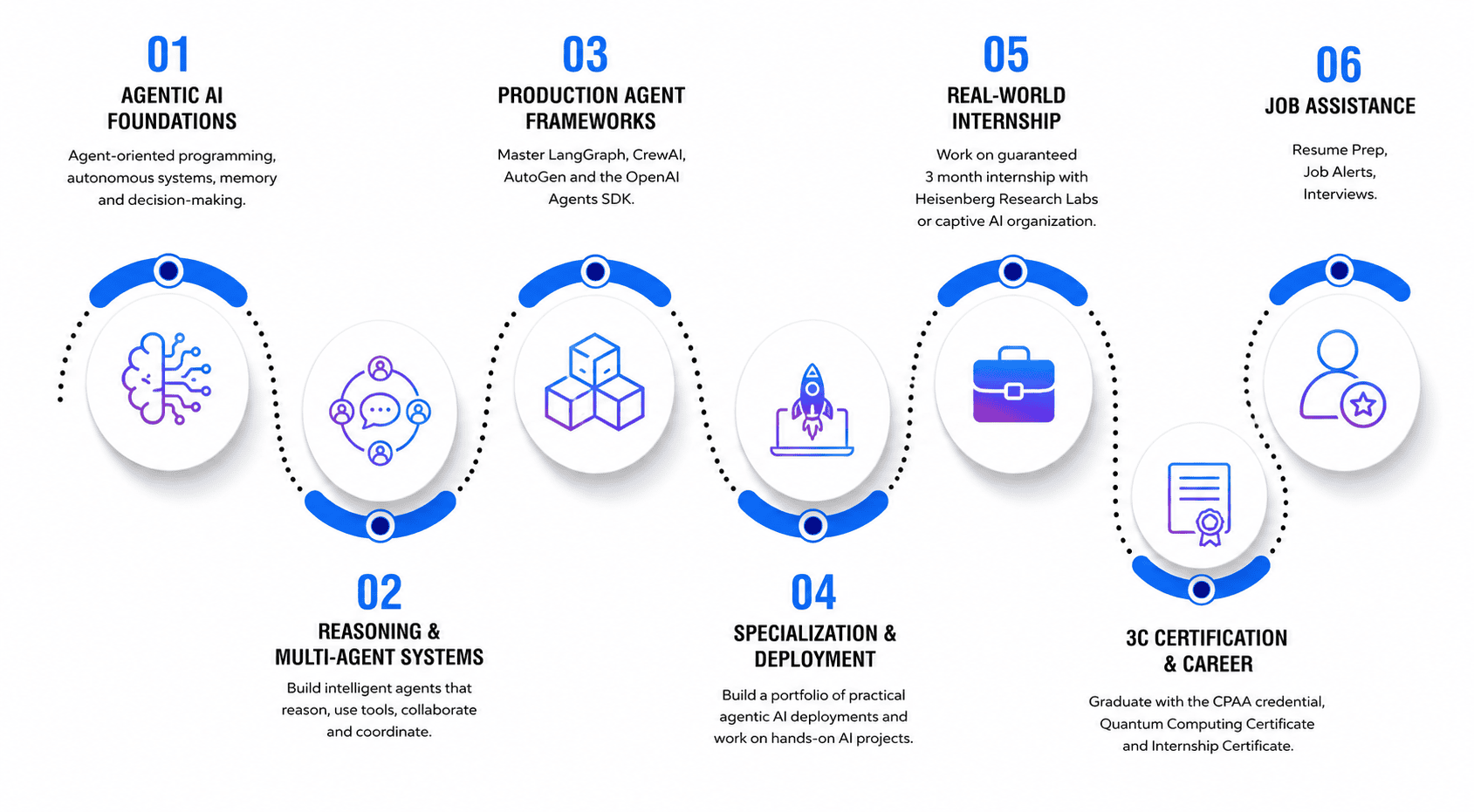
01
Agentic AI foundations
Agent-oriented programming, autonomous systems, memory and decision-making.
02
Reasoning and multi-agent systems
Build intelligent agents that reason, use tools, collaborate and coordinate.
03
Production agent frameworks
Master LangGraph, CrewAI, AutoGen and the OpenAI Agents SDK.
04
Specialization and deployment
Build a portfolio of practical agentic AI deployments and work on hands-on AI projects.
05
Real-world internship
Work on a guaranteed three-month internship with Heisenberg Research Labs.
06
3C certification and career
Graduate with the CPAA credential, a Quantum Computing Certificate and an Internship Certificate.
07
Job assistance
Resume preparation, job alerts and interviews.
Tools ecosystem
The tools you will actually use
Seven groups of tooling, from the agent loop itself through to the guardrails and observability a production agent cannot ship without.
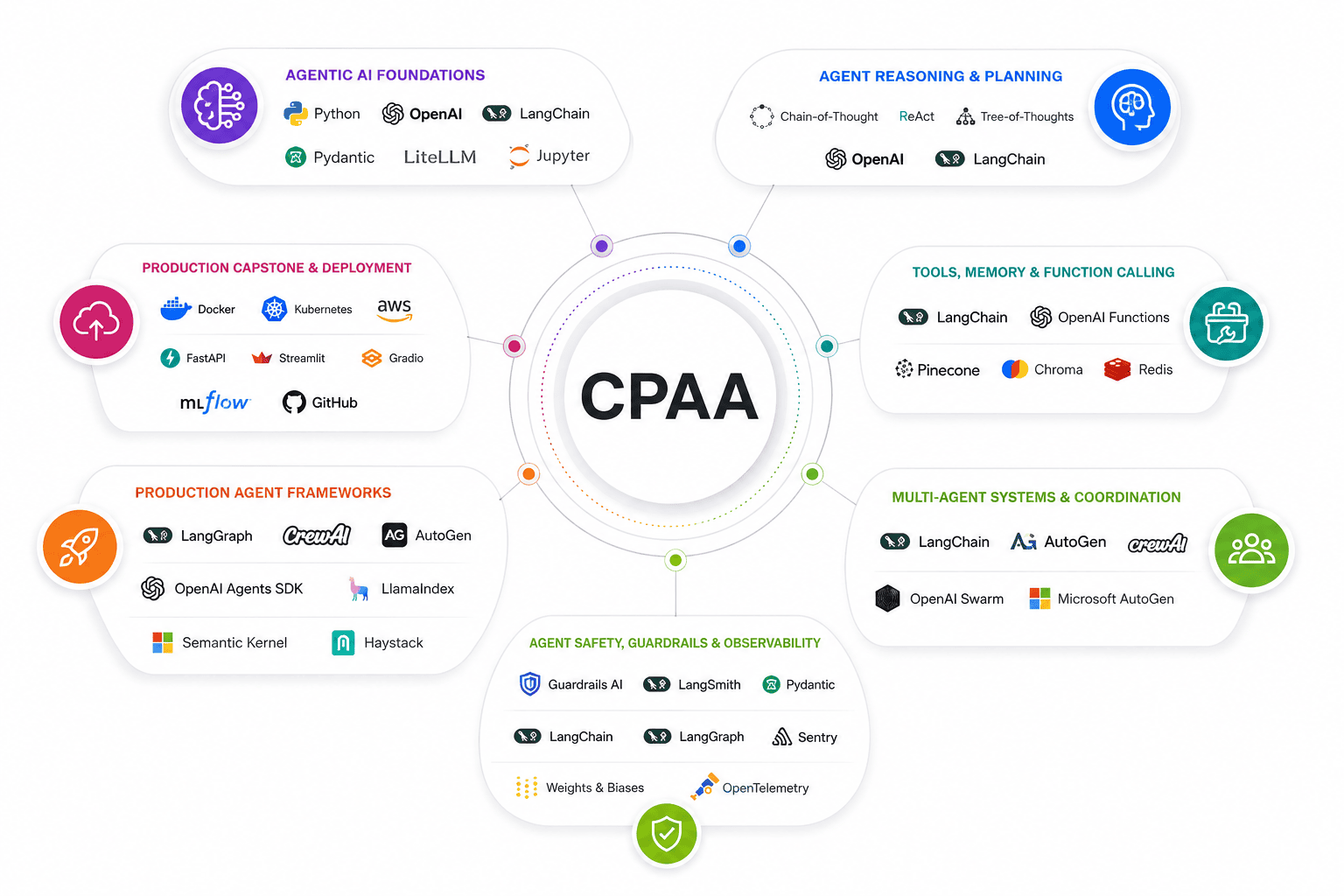
Agentic AI foundations
Python · OpenAI · LangChain · Pydantic · LiteLLM · Jupyter
Agent reasoning and planning
Chain-of-Thought · ReAct · Tree-of-Thoughts · OpenAI · LangChain
Tools, memory and function calling
LangChain · OpenAI Functions · Pinecone · Chroma · Redis
Multi-agent systems and coordination
LangChain · AutoGen · CrewAI · LangGraph
Agent safety, guardrails and observability
Guardrails AI · LangSmith · Pydantic · LangChain · LangGraph · Sentry · Weights & Biases · OpenTelemetry
Production agent frameworks
LangGraph · CrewAI · AutoGen · OpenAI Agents SDK · LlamaIndex · Semantic Kernel · Haystack
Internship build and deployment
Docker · Kubernetes · AWS · FastAPI · Streamlit · Gradio · MLflow · GitHub
3C certification
Three credentials, one programme
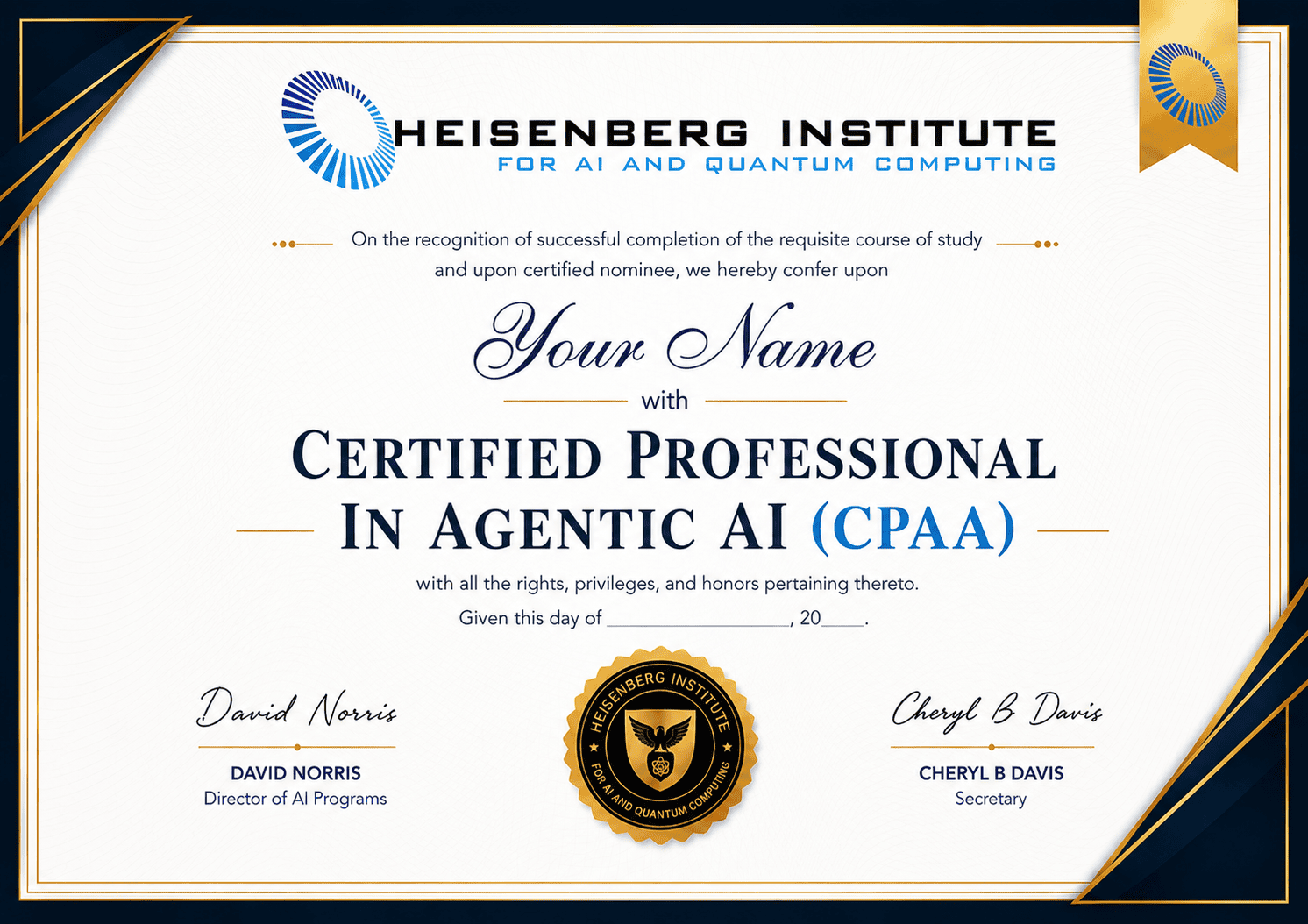
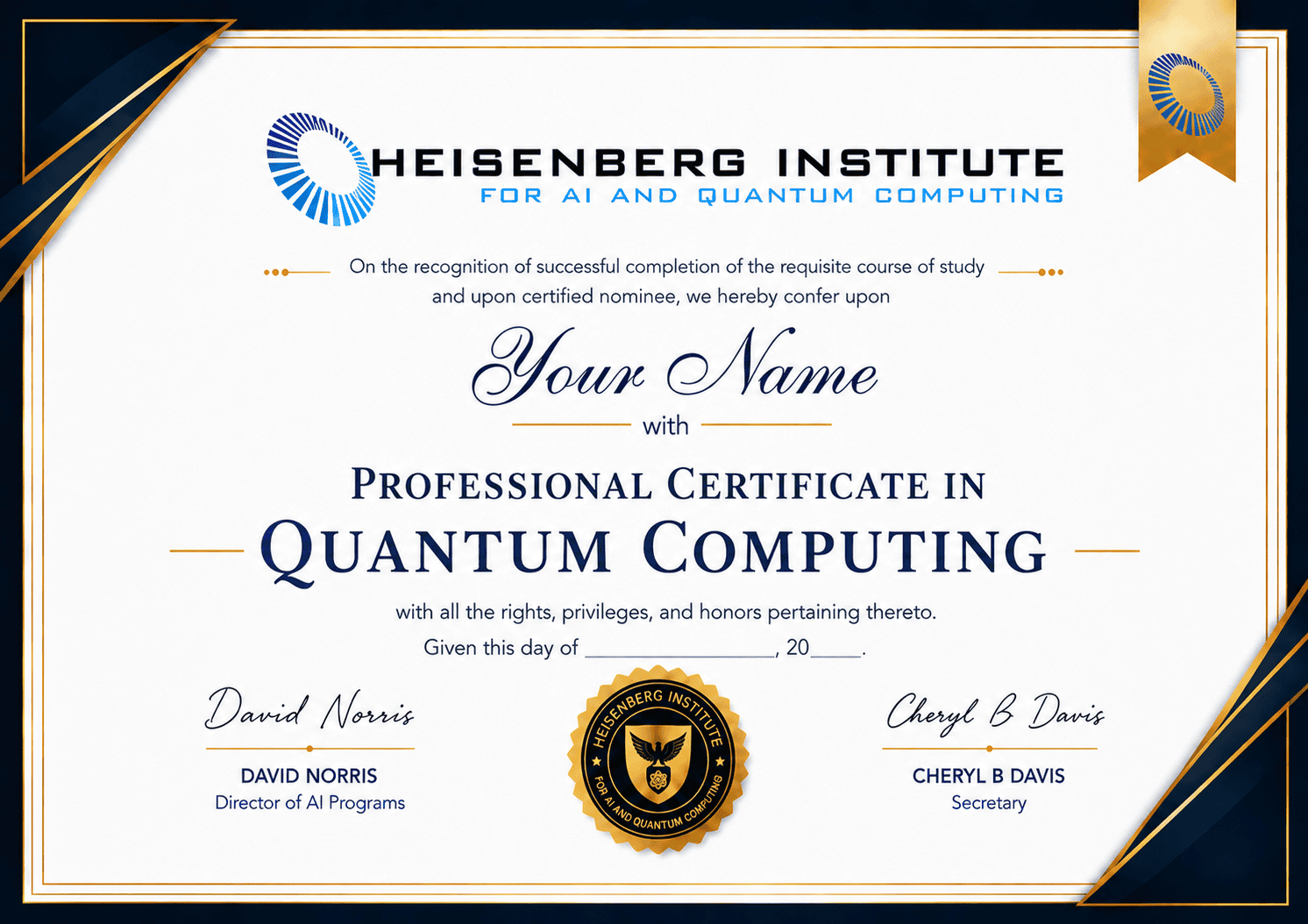
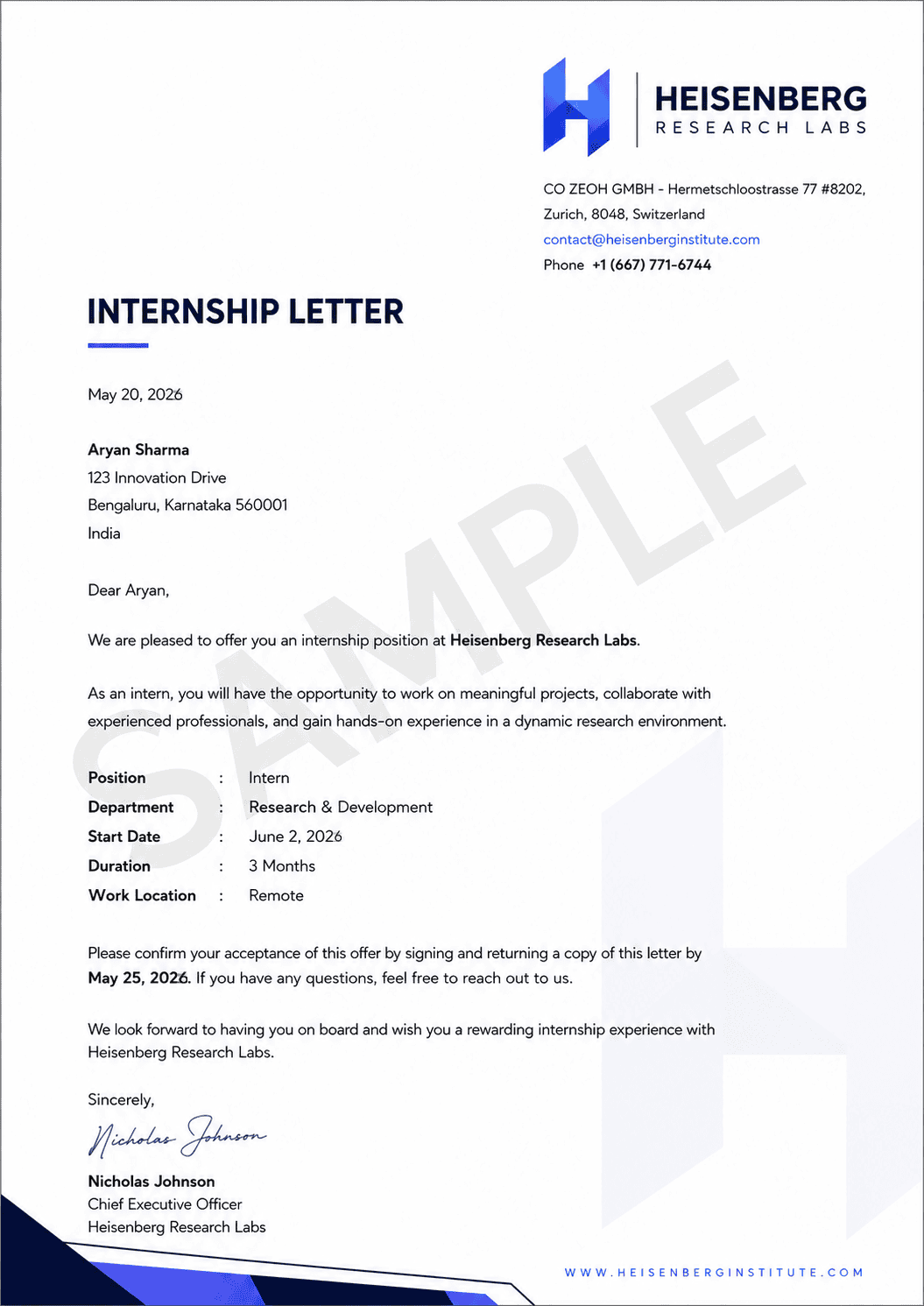
Successful completion of the CPAA programme confers three distinct credentials issued by the Institute.
Certified Professional in Agentic AI (CPAA)
Validates your expertise and credibility as a builder of autonomous systems.
Professional Certificate in Quantum Computing
Demonstrates your fundamentals in quantum technologies.
Internship Certificate
Issued on completion of the guaranteed three-month internship — confirmed real-world experience.
Alumni voices
In their own words
Learners on the CPAA programme on what changed for them.
Intake schedule
Monthly cohort commencement
The programme admits a cohort every month. Applying early is the surest way to secure the cohort you want.
All classes are held online only. Live sessions run on Saturday and Sunday, 1:30–4:30 PM GMT.
Cohort
Application closes
Program starts
Status
CohortSeptember 2026 Cohort
Application closesSeptember 1, 2026
Program startsSeptember 25, 2026
StatusClosed
CohortOctober 2026 Cohort
Application closesOctober 1, 2026
Program startsOctober 25, 2026
StatusOpen
CohortNovember 2026 Cohort
Application closesNovember 1, 2026
Program startsNovember 25, 2026
StatusUpcoming
CohortDecember 2026 Cohort
Application closesDecember 1, 2026
Program startsDecember 25, 2026
StatusUpcoming
CohortJanuary 2027 Cohort
Application closesJanuary 1, 2027
Program startsJanuary 25, 2027
StatusUpcoming
Programme fee
$2,199USD · full programme
Flexible payment options and corporate sponsorship support are available — contact the admissions team for details.
Bonus: participants in the CPAA programme receive a live masterclass on quantum computing and a Professional Certificate in Quantum Computing.
Your fee includes
- The 3C certification awarded by the Heisenberg Institute for AI and Quantum Computing
- Live faculty-led masterclasses — interactive sessions with practicing agent engineers
- Career acceleration: mentorship, professional networking, and lifetime alumni membership
Frequently asked questions
Before you apply
Are classes held online or on campus?
All classes are held online only. Live sessions run on Saturday and Sunday, from 1:30 PM to 4:30 PM GMT.
When do cohorts begin?
Cohorts commence every month. Applications for each cohort close on the 1st of the month, and classes begin on the 25th. Early application is encouraged.
How much programming experience do I need?
You should be comfortable writing Python before you start. The first month covers async IO, threading and event-driven architectures rather than the language itself, so participants arriving without working Python find the pace difficult.
What is the weekly workload?
A project is assigned every week and is expected to be complete before the next session. Together with the weekend live sessions, participants should plan for a meaningful weekly time commitment.
What happens if I am unable to keep up with projects or attendance?
The programme asks for sustained commitment, and the Institute supports every student in meeting it. Where a student is repeatedly unable to complete assigned projects or attend sessions, the Institute may respectfully withdraw them; in such cases fees are refunded on a pro-rata basis. Certification cannot be issued without full completion. See the refund policy.
Which frameworks will I actually use?
LangGraph, CrewAI, AutoGen and the OpenAI Agents SDK, alongside LangSmith for monitoring. The curriculum is revised each cohort, because this part of the field moves faster than an annual syllabus can track.
Is there an internship as part of this programme?
Yes. Every participant completes a guaranteed three-month internship with Heisenberg Research Labs, with the flexibility to choose a research or an applied-engineering track. It is a graded part of the programme and it earns an Internship Certificate alongside the CPAA credential. Tech AI Magazine lists the Institute among its Top 10 Global AI Institutes of 2026.
Are flexible payment options available?
Yes. Flexible payment plans and corporate sponsorship support are available — contact the admissions team for details.
Who mentors the internship project?
Internship projects are mentored within Heisenberg Research Labs, where students work alongside senior agent engineers on architecture, cost and reliability.